




HARARE — Chief Justice Luke Malaba has warned that acute shortages of judges, magistrates and support staff are undermining effective justice delivery, despite major investments in decentralising the courts over the past decade.
Officially opening the 2026 legal year in Harare on Monday, Malaba said deploying the correct number of competent staff at every court station was critical to maintaining efficiency and public confidence in the justice system.
“Staff shortages invariably overwork the few members in post and may cause staff demotivation. If that happens, it will inevitably result in poor work output,” he said.
Malaba said the judiciary had undertaken an extensive decentralisation programme, particularly within the High Court and magistrates’ courts, to improve access to justice across the country.
“New magistrates’ court stations were opened in many districts. New seats of the High Court were established in various provinces, in addition to the streamlining of the High Court itself into specialised divisions, including the commercial and anti-corruption divisions in Harare,” he said.
The expansion had not been matched by a corresponding increase in judicial and support staff, he said.
“The number of judges and magistrates in the country has barely increased despite the opening of new courts. Any recruitment that has taken place was intended mainly to cover gaps caused by staff attrition through deaths, retirements, resignations and discharges,” Malaba observed.
He said Zimbabwe’s entire criminal and civil justice system was being handled by just 80 judges and 250 magistrates.
“The untenable situation is made worse by the fact that Zimbabweans are an enlightened people who have embraced modern ways of dispute resolution,” he said.
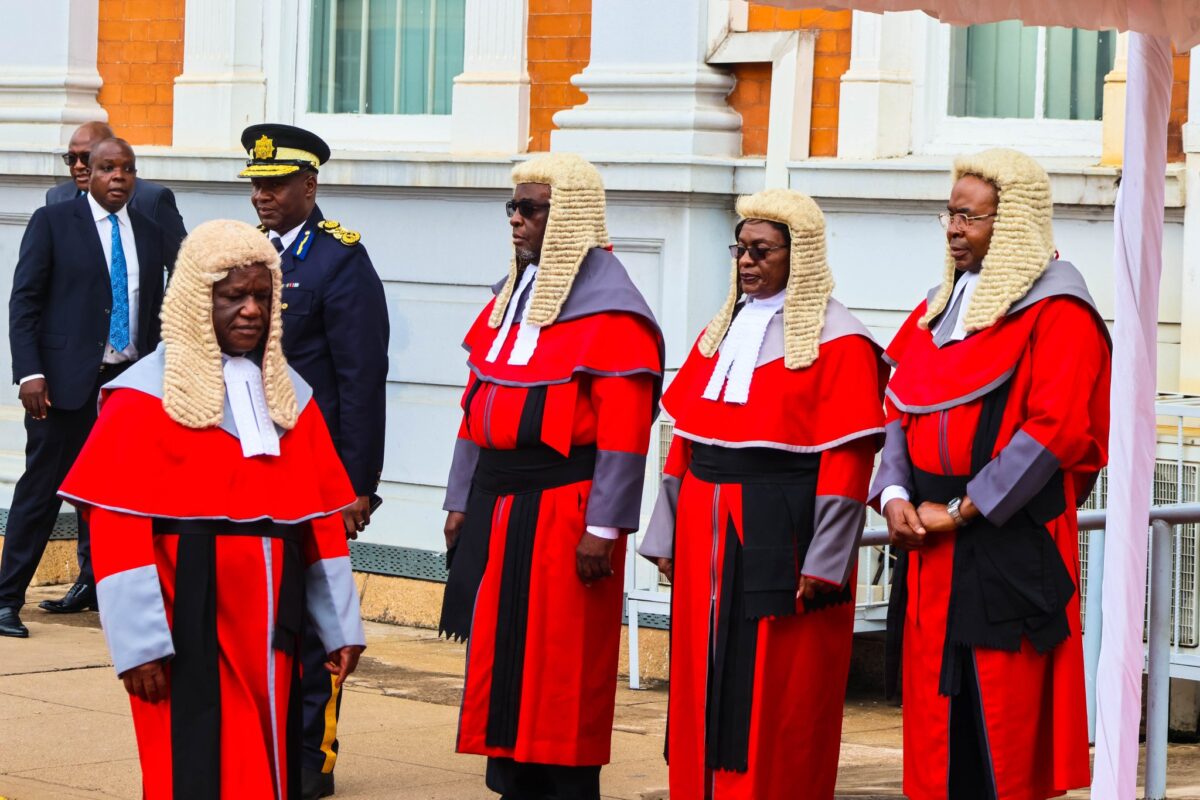
Chief Justice Luke Malaba talks to justice minister Ziyambi Ziyambi during the official opening of the 2026 legal year in Harare on January 12, 2026
Malaba said the misalignment between staffing levels and workload had significantly contributed to delays and risked compromising both the quantity and quality of judicial services.
“The number of judges and magistrates in post must be dramatically increased if the judiciary is to continue performing its constitutional mandate,” he said.
Deputy Chief Justice Elizabeth Gwaunza, who opened the legal year in Bulawayo, picked up a similar theme.
She said said the speedy resolution of matters by the courts in 2025 should not obscure the reality of severe capacity constraints.
“The achievements recorded would not have been possible without judges, magistrates, registrars and support staff working under significant workload pressure,” she said.
Gwaunza said Bulawayo had only seven High Court judges, who collectively handled exceptionally high volumes of work throughout the year.
“The shortage of judges is making incumbents operate under unbearable pressure. This circumstance may ultimately affect not only the quality of their work, but also their health and well-being,” she said.
She said sustained increases in litigation continued to place judicial officers under strain, raising concerns about long-term institutional sustainability.
“While the disposal rates are commendable, they are being achieved at considerable personal cost to judicial officers,” Gwaunza said.
She said continued support, adequate staffing and enhanced judicial capacity were essential to prevent delays and keep case backlogs under control.
“Courts must continue to adjudicate and finalise matters expeditiously so that justice is not delayed,” she said.
Judicial Service Commission secretary Walter Chikwana said they had prioritised the recruitment of additional judges this year as part of efforts to address persistent case backlogs.
“By increasing the number of judges, we expect to significantly improve case clearance rates and ensure that matters are heard and concluded within reasonable timeframes,” Chikwana told journalists.